
On this page
- Game Animator in 60 Seconds
- What Does a Game Animator Do?
- Kinds of Game Animation Work
- A Week on a Game Animation Team
- Skills and Software for Animating Games
- Animation vs. 3D Art vs. Technical Art in Games
- How to Get Into Game Animation
- Degrees That Teach Game Animation
- The Game Animation Demo Reel
- Animation Jobs in Games and How People Get Hired
- What Game Animation Pays
- Job Outlook for Animators in Games
- The Hard Parts of Animating for Games
- Frequently Asked Questions
- Related Pages
- Sources
Game Animator in 60 Seconds
- The move must respond the instant you press a button. In film an animator controls every frame. In a game the player holds the controller, so animation has to look good and respond immediately. Moves are built from short pieces, a start, a loop and a stop, that the engine blends on the fly. The Job ›
- Most of the week is iterating, not animating. On a heavy attack you block out poses Monday and get them into the engine the same day. When the designer says players get hit out of the wind-up, you shorten it. Very little is spent animating something from start to finish. A Typical Week ›
- Getting a character into an engine separates game animators. Start with a bouncing ball, a pendulum and a walk cycle, which studio reviewers look for first. Then animate a full rig and make a character idle, run, jump and attack under a controller. That step separates a game animator from a general one. How to Become One ›
- Open with your best piece and keep the reel short. Reviewers watch many reels and decide quickly, so cut anything you would have to explain. Show a locomotion set and a short attack chain or hit reactions, ideally playing in an engine, and label what you did if you used motion capture or someone else's rig. Demo Reel ›
- The $102,030 median is not a game-only figure. The occupation's median was $102,030 in May 2025, with the middle half earning $75,490 to $139,130. It includes film, TV and advertising, so use it as the market for your skills. Salary ›
Heads up BLS projects a decline of 0.3% for the occupation, so most openings come from turnover and you are competing for existing seats.
What Does a Game Animator Do?
A game animator turns a still character into something that walks, fights, flinches and talks. The model and the skeleton come from other people. The animator decides how the body moves: how long a jump takes to leave the ground, where the weight sits at the top of a swing, how a creature recovers after it's hit. In film, an animator controls every frame the audience sees. In a game, the player is holding the controller, so the animation has to look good and also respond the instant a button is pressed.
That second job is what makes game animation its own craft. A move is usually built from short pieces that the engine stitches together on the fly: a start, a loop and a stop for running, plus turns, transitions and reactions. Each piece has to blend into the others from any frame, at any speed, without the character sliding or snapping. Animators spend as much time setting up and testing those pieces in the engine as they do posing them.
No federal occupation is named game animator. BLS counts animators with special effects artists and animators, and the O*NET tasks for that occupation describe the work directly: "create two-dimensional and three-dimensional images depicting objects in motion or illustrating a process, using computer animation or modeling programs" and "script, plan, and create animated narrative sequences under tight deadlines, using computer software and hand drawing techniques."
The Main Kinds of Work
- Gameplay animation. Everything the player controls or fights: locomotion, attacks, jumps, climbs, hit reactions and deaths. Timing matters more than anything here, because a slow wind-up changes how a weapon plays.
- Cinematics. Cutscenes and scripted moments, which are closer to film work. O*NET's list includes the ability to "apply story development, directing, cinematography, and editing to animation to create storyboards that show the flow of the animation and map out key scenes and characters," and cinematic animators use exactly that.
- Facial animation. Expressions, lip sync and eye movement, both in cutscenes and in conversations during play.
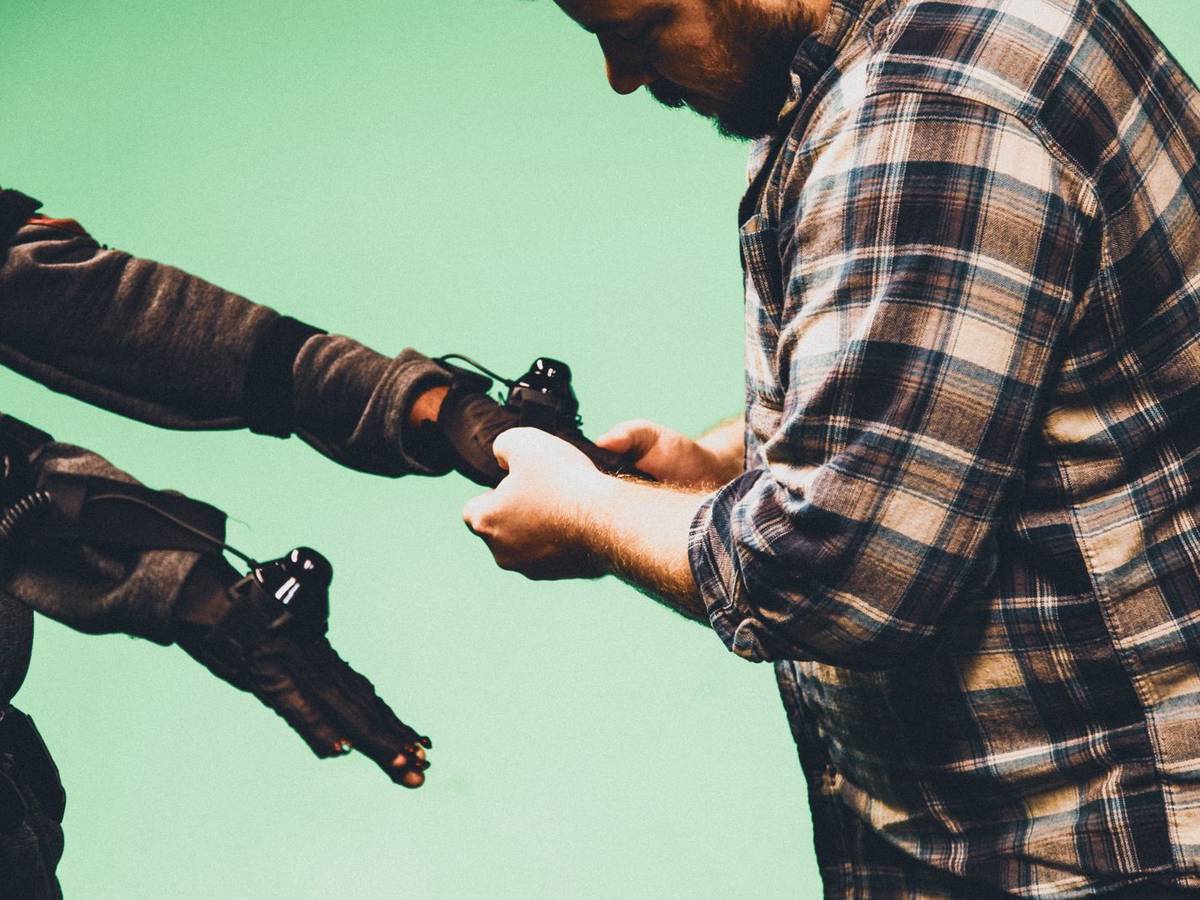
- Motion capture cleanup. Captured motion arrives noisy. Feet slide, hands pass through props, and the timing is a performer's rather than the game's. Animators fix it, cut it into usable pieces and push it where it needs to be bigger or snappier.
- The rigging handoff. Animators don't usually build rigs, but they test them first. When a shoulder collapses or a control is missing, the animator finds it and works it out with the rigger or technical artist.
Kinds of Game Animation Work
A small studio has one or two animators doing all of the above. Larger teams split the work into roles you'll see in job postings:
- Gameplay animators own a character's moveset and work daily with designers and gameplay programmers.
- Cinematic animators work on cutscenes, often with camera and staging duties as well as acting.
- Facial animators focus on faces and dialogue.
- Creature animators handle animals and monsters, which means four legs, wings or bodies nobody has motion capture for.
- Technical animators sit between animation and code, building the engine setup that plays the animations. That role overlaps with the technical artist job.
O*NET's sample job titles for the occupation, 3D Animator, 3D Artist, Animator, Artist, Digital Artist, Graphic Artist, show how wide the occupation is. Most people counted in it aren't in games at all.
A week in the jobA Week on a Game Animation Team
Say you're a gameplay animator on an action game, and this sprint you own the heavy attack for the main character. On Monday you meet the combat designer, who wants the attack to feel slow and dangerous but still be safe to use. You block out a rough version in a few key poses and get it into the engine the same day, because a move only reveals its problems when someone plays it. Tuesday the designer says the wind-up is too long and the player gets hit out of it. You shorten it and make the anticipation pose bigger, so it still reads as heavy.
Wednesday you polish: overlap in the cape, a settle at the end, a camera shake request for the impact. Thursday the motion capture for the new dodge comes in, and you spend the day cleaning foot contacts and cutting it into a start, a loop and a recovery. Friday is review. The lead animator flags that the attack's recovery pops when the player cancels into a dodge, so that blend goes on next week's list. Very little of the week is spent animating something from start to finish. Most of it is iterating with the people who make the move play well.
SkillsSkills and Software for Animating Games
- The fundamentals of motion. Weight, timing, spacing, anticipation, follow-through and appeal. Every studio test checks them, and no software replaces them.
- Body mechanics. How a real body shifts weight, pushes off and lands. Animators study reference video and often film themselves acting out a move.
- Game feel. Knowing when to cheat realism so a move is readable and responsive. A realistic sword swing is usually too slow for a game.
- Engine setup. Importing animations, setting up the system that chooses and blends them, and debugging why a character is sliding.
- Working with motion capture. Cleaning, retargeting and editing captured data, and directing a performer if you get the chance.
- Taking notes well. Animation is reviewed constantly, by leads, designers and directors. Changing a move without getting defensive is part of the job.
The Software
O*NET's software list for special effects artists and animators includes Autodesk 3ds Max Design, Adobe After Effects, Apple Final Cut Pro and Pixar RenderMan Studio on the animation and video side, Unity Technologies Unity as a game engine, and C++ and Python for scripting. It also lists Perforce Helix software, the kind of version control tool game teams use so two people don't overwrite the same file. In practice a game animator needs one 3D animation package, one commercial game engine and comfort with version control. Scripting is optional for most animators but useful, since it lets you automate the repetitive parts of cleanup and export. Learn one package and one engine deeply before adding others.
Compare rolesAnimation vs. 3D Art vs. Technical Art in Games
All three jobs fall in the same federal occupation, and on a small team one person may do parts of each. The difference is what each one spends the day on.
| Role | Makes | Judged on |
|---|---|---|
| Game animator | Motion: movesets, cutscenes, faces, cleaned-up capture | Whether movement looks alive and plays responsively |
| 3D artist | Still assets: characters, props and environments, with textures | Whether the asset looks right and fits the art style |
| Technical artist | Rigs, shaders, tools and the art pipeline | Whether the art team works faster and the game runs |
The handoffs run in one direction. A 3D artist builds the character, a rigger or technical artist gives it a skeleton and controls, and the animator brings it to life. If you love making things look good while they stand still, the 3D artist path fits better. If you love solving the problems between art and code, look at technical art. If you watch a game and notice how a character lands from a jump, you're probably an animator.
Getting inHow to Get Into Game Animation
- Learn the fundamentals on simple exercises. A bouncing ball, a pendulum, a flour sack, a walk cycle. They look basic, and they're what studio reviewers look for first.
- Move to body mechanics. Jumps, lifts, pushes and falls on a full character rig. Shoot your own reference and study it frame by frame.
- Learn a 3D animation package well. Graph editing, which is how you control timing and spacing between poses, matters more than knowing every menu.
- Get your animation into a game engine. Set up a character that idles, runs, jumps and attacks under a controller. This is the step that separates a game animator from a general one.
- Build a short reel and get it critiqued. Then apply for junior animator roles, internships and studio jobs that put you near the animation team.
Acting helps more than people expect. Animators who take an acting or movement class tend to make choices that feel more specific, and they're more comfortable filming themselves for reference.
EducationDegrees That Teach Game Animation
There's no license, and no degree is required. O*NET doesn't publish an education survey for this occupation, so there's no federal figure for how many animators hold a degree. A bachelor's in animation is still the most common route, because animation is learned through hundreds of hours of practice with critique, and a program puts that on a schedule. The best animation schools ranking scores 82 schools with an animation bachelor's on completion, cost and size, and Brigham Young University, New Jersey Institute of Technology and University of Hawaii at Manoa lead it.
When you compare programs, ask questions the ranking can't answer. Does the program teach game engines, or only film-style animation? Is there a motion capture stage students can use? Do animation students work on team game projects with design and programming students? Where did last year's graduates' reels land them? A program that answers yes to the first three will get you closer to game work.
Degree, Self-Taught or Short Course
A degree gives you structured time, critique, deadlines and teammates, and the risk is cost. Self-teaching is realistic in animation because the reel is what gets read, and good online courses and mentorship programs exist. The risk there is working alone without honest feedback. Short courses are useful for a single skill, such as body mechanics or facial animation, and work best as a supplement to either route. If you're weighing the bigger choice, the is game design a good career article covers the trade-offs, and the most affordable game design schools ranking helps if cost is the main concern.
PortfolioThe Game Animation Demo Reel
Studios hire animators on a short video of their best work, called a demo reel. Reviewers watch a lot of them and decide quickly, so the reel has to open strong and stay short. Put your best piece first. Cut anything you'd have to explain. A short reel of strong work will do better than a long one with weak pieces in it.
For game jobs, the reel should show gameplay animation, not only film-style acting shots:
- A locomotion set. Idle, walk, run and the transitions between them, ideally captured playing in an engine.
- Combat or action. A short attack chain or a set of hit reactions, showing weight and readable timing.
- One acting or facial shot, if you're aiming at cinematics.
- A creature or non-human piece, if you have one, since it shows you can animate without reference footage of yourself.
Label each shot with what you did, especially if you used motion capture or someone else's rig. Reviewers respect honesty about credit, and they will notice if it's missing. The game design portfolio guide covers presentation more broadly.
JobsAnimation Jobs in Games and How People Get Hired
Animation teams are smaller than art or programming teams, so junior openings are fewer and the competition is real. Common ways in:
- Junior or associate animator. The direct route, won almost entirely on the reel and an animation test.
- Internships. Often the first credit for students, and some convert into jobs.
- Motion capture cleanup work. Cleanup is time-consuming and studios need people for it, which can be a way onto the team.
- Outsourcing studios. Some studios produce animation for other companies' games, and they hire juniors to work on many projects.
- QA and other studio jobs. Being in the building lets you meet the animation team and show your reel. See the game tester guide.
Many applications include an animation test: a short task, such as a specific move on a provided rig, completed within a deadline. Treat it like a reel piece, and make sure it plays well, not only that it looks good.
A Typical Ladder
You start as a junior animator, working on pieces of a moveset under close review. An animator owns whole sets, such as one character's combat. A senior animator owns the hardest characters, sets quality standards and gives notes to others. A lead animator runs the team's schedule and reviews, and an animation director sets the animation style for the whole game. The higher you go, the less of your day is spent animating.
PayWhat Game Animation Pays
BLS counts game animators with special effects artists and animators, whose national median wage was $102,030 in May 2025. The middle half earned $75,490 to $139,130, the lowest-paid 10% under $58,600 and the top 10% over $177,110.
That occupation covers film, TV and advertising as well as games, so treat it as the market for your skills rather than a studio pay scale. The lower percentiles are the closest guide to a first job. The salary page has every state and how animator pay compares with other game jobs.
- Salary Animator salary $102,030 median (special effects artists and animators)
Job Outlook for Animators in Games
BLS projects a decline of 0.3% in special effects artist and animator jobs from 2025 to 2035, against 3.5% for all jobs. It still expects about 4,200 openings a year, mostly from people retiring or moving to other work. BLS doesn't project game animation separately, so the figure blends games with film, TV and advertising.
For scale, the projections count about 51,900 jobs in the occupation. That's more than the wage survey's 19,970 because the projections also count self-employed workers, and some animation work is freelance or contract. A flat outlook doesn't mean no jobs. It means most openings come from turnover, so you're competing for existing seats more than for new ones. Animation skills also carry across media, which gives you somewhere to go if game hiring slows.
The hard partsThe Hard Parts of Animating for Games
- Your work gets cut and changed. A design change can throw out a week of polish, and a move you love may be sped up until it looks wrong to you but plays right.
- Volume. A single character can need a very large number of animations, and many of them are small transitions nobody will notice unless they're missing.
- Constant review. Leads, designers and directors all give notes, and they don't always agree.
- Hiring is competitive and uneven. Animation teams are small, studios hire for projects, and teams can shrink after a game ships or is canceled.
- Crunch. Hours can run long near a release, and animation often lands late in a schedule because it depends on finished designs and rigs. Ask about it directly when you interview.
None of that is a reason to avoid the job. It's a reason to go in with modest debt, a reel you're proud of and skills that travel to film, TV and advertising. If you want to compare animation with the other paths first, the game design careers hub covers every game job on one page, and the video game designer guide covers the people you'll work with most.
Frequently Asked Questions
What Does a Game Animator Do?
A game animator makes characters and creatures move, both while the player controls them and in the game's cutscenes. That means walk and run cycles, attacks, jumps, reactions and facial performances, plus cleaning up motion capture and setting it up so the engine can blend one move into the next. O*NET's description of the wider occupation includes creating "create two-dimensional and three-dimensional images depicting objects in motion or illustrating a process, using computer animation or modeling programs." The animator works closely with designers, who decide what a move should do, and with riggers, who build the skeleton it moves on. See what a game animator does.
How Much Do Game Animators Make?
BLS counts game animators with special effects artists and animators, whose national median wage was $102,030 in BLS May 2025. The middle half earned $75,490 to $139,130, the lowest-paid 10% under $58,600 and the top 10% over $177,110. The figure covers film, TV and advertising as well as games, and BLS doesn't publish a games-only number. Use it as a guide to the market, then compare any studio offer with the state and metro figures. See the full animator salary data.
Do You Need a Degree to Be a Game Animator?
No, there's no license or required degree, and studios hire game animators on their demo reel. A bachelor's in animation is still the common route, because it gives you years of deadlines, critique and classmates to work with. The best animation schools ranking scores 82 bachelor's programs on completion, cost and size. If you teach yourself, you need another source of honest feedback, such as online critique groups or game jams, and you need to finish work on a schedule.
How Do I Become a Game Animator?
Learn the fundamentals of motion first, then learn how games use it. Start with weight, timing and spacing on simple exercises like a bouncing ball and a walk cycle. Then animate a character in a 3D package, bring it into a game engine and get it playing under a controller. Build a short reel of your best gameplay pieces, and apply for junior animator roles or for QA or other studio jobs that put you near the animation team. See the path step by step.
What Software Do Game Animators Use?
Game animators use a 3D animation package, a game engine and a few supporting tools. O*NET's software list for the occupation includes Autodesk 3ds Max Design and Adobe After Effects for animation and video, Unity Technologies Unity as a game engine, and C++ and Python for scripting. It also lists Perforce Helix software, a version control tool many game teams use to share files. Learn one animation package and one engine deeply before adding more, because studios care more about your motion than your tool list. See the skills and software game animators use.
Is Game Animation a Good Career?
It can be, but it's a small and competitive field. BLS projects a decline of 0.3% in special effects artist and animator jobs from 2025 to 2035, against 3.5% for all jobs, with about 4,200 openings a year, most from people retiring or changing jobs. Those figures cover film, TV and games together. The occupation's median of $102,030 is well above the $50,980 median for all jobs, and animation skills carry over to film, TV and advertising if game hiring slows. See the full job outlook.
Sources
- 1 O*NET OnLine, 27-1014.00 Special Effects Artists and Animators Tasks, sample job titles and software, quoted as published. Accessed .
- 2 BLS, Occupational Employment and Wage Statistics, May 2025: 27-1014 National and state wages and employment for special effects artists and animators, and the related game occupations in the comparison table. Accessed .
- 3 BLS, Employment Projections 2025-35 Projected employment change and openings. Accessed .
- 4 NCES, IPEDS Completions Animation bachelor's programs in the animation schools ranking.