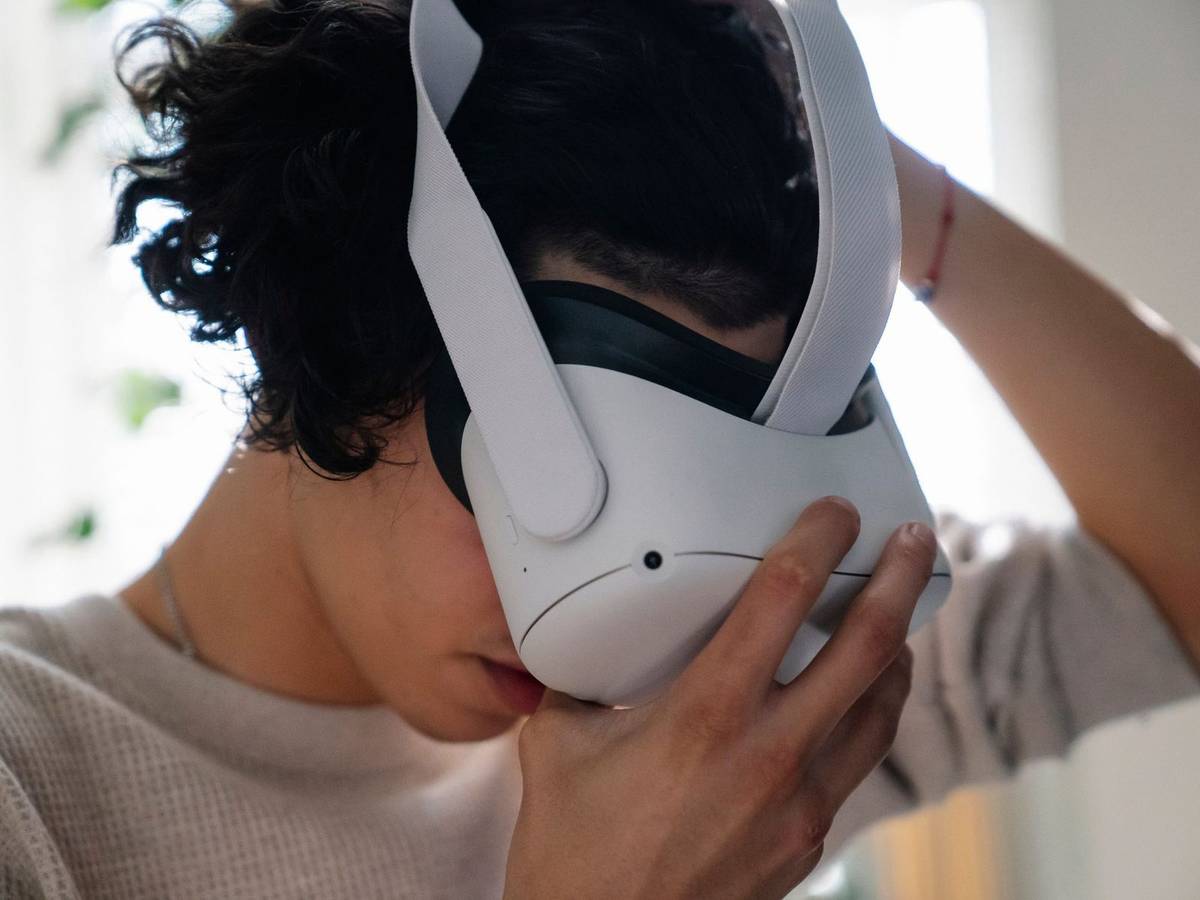
The best simulation and VR degree programs for 2027, by our score, are at University of California-Irvine, University of Maryland-College Park and University of Wisconsin-Stout. All 18 bachelor's programs in simulation and virtual environments, the field that covers VR, are ranked below on completion, net price and size.
Kevin ToFounder & EditorB.S. in Computer Science, Temple UniversityUpdated
18Simulation and VR Programs Ranked for 2027Our ranking
94.1Top Score: University of California-IrvineOur ranking
These 18 programs graduate about 586 students a year.Graduates work on games, training simulators and visualization, not only games. Median net price here is $25,500 a year. Look elsewhere for pure game design or code, since the game development degrees ranking covers programming and simulation together.Is It for You ›
The difference is emphasis, not tools.A simulation degree usually points at interactive 3D for any purpose, while a programming degree points at games. Simulation schools have a median completion of 65% and net price of $25,500, against 55% and $19,400 for game programming. Read the course list.Simulation Versus Programming ›
7 of the 18 programs are at public colleges.The programs sit in 14 states, and California has the most with 4. Median net price is $15,800 at public schools and $30,600 at private ones, but the public figure is in-state only. Many states have no program, so you may need to look outside yours.Where Programs Are ›
4 ranked schools also offer a simulation master's.Past the bachelor's there are 8 master's programs at 8 schools, so at 4 of them you could stay for both degrees. There are also 6 associate programs at 6 schools. Ask the four-year school in writing which associate courses it accepts before you transfer.Master's and Associate ›
Heads up If games are your goal, check that the program has game projects, not only simulation work.
Is it for you
Who a Simulation and Virtual Reality Program Suits
Use this ranking if you want to build virtual worlds, not only games. Simulation and VR programs teach real-time 3D, engines and interaction, and their graduates work on games, training simulators and visualization. The 18 programs graduate about 586 students a year between them, and 7 are at public colleges.
Look elsewhere if you want pure game design or code. The game development degrees ranking covers programming and simulation together, and the best game design schools ranking covers the design side. Median net price here is $25,500 a year.
Methodology
How We Score These Programs
Each program gets a score out of 100 from three things you can compare at every school: how many students finish, what they pay after grants, and how many graduates the program turns out each year. Every school reports these figures to the U.S. Department of Education the same way.
Reputation and peer surveys don't count, because no one measures them the same way for every school. Each card also shows earnings ten years after starting college, for context. Earnings move so closely with completion that counting both would count the same thing twice.
Scores are absolute, not graded on a curve. The national median score is 59.5.
Bachelor's programs in simulation, open to new students
A program makes this list when it is a bachelor's in simulation and virtual environments at a college in the 50 states or DC, has had graduates in the last three years, and the school publishes its completion rate and net price. It must also be open to new students: closed and phasing-out programs are left off. A college with more than one such program appears once, with its higher-scoring program. A program missing one of these figures is left off rather than estimated.
What the score counts100 pts total
Completion
40 pts
How many entering students, full-time, part-time and transfer, finish a degree within eight years. A school-wide figure. Source: IPEDS.
Scoring: The rate times 40, so a 60% rate earns 24.
Net price
40 pts
What first-year students who get grants actually pay per year, at in-state rates for public colleges. A school-wide figure. Source: IPEDS.
Scoring: All 40 points at $14.4k a year or less, none at $43.6k or more, and evenly fewer in between, so $29k earns 20.
Grads a year
20 pts
How many students finish this program each year, averaged over three years. The program's own figure. Source: IPEDS.
Scoring: More graduates earn more points, quickly at first and then more slowly, up to all 20 at 50 or more a year. 5 a year earns 9.1, 25 a year earns 16.6.
What the Score Means for Simulation and VR Degree Programs
Each program scores the same here as in the best game design schools ranking, so the two lists agree. University of California-Irvine places No. 1 there.
Top 18
The 18 Best Simulation and VR Degree Programs in 2027
The 18 highest-scoring simulation and VR programs. Completion, net price and earnings are school-wide; graduates a year is the program's own. The score is out of 100.
The Computer Game Science major treats games as more than entertainment. Students build digital games for education, training and social change as well as play, and graduates have taken their skills into serious games in healthcare and education. Courses in graphics, artificial intelligence and multiplayer systems support that range, and electives reach into modeling, world building and the social impacts of games.
Team projects run across the degree and culminate in a two-quarter capstone supervised by local industry designers. The program graduates about 51 students a year. School-wide, 86% of entering students finish within eight years and the net price for aided first-years is $14,647. Out-of-state tuition runs $31,888 above the in-state rate. Students learn on a mix of hardware and game platforms, which carries over to training simulations and other interactive systems beyond commercial titles.
Virtual and augmented reality sit at the center of this major. Students design immersive digital environments, projective spaces, interactive installations and tangible computing, and they collaborate on scientific visualizations, historical recreations and performances. Labs cover motion capture, imaging and 3D scanning, sound, design and XR and VR.
The program says graduates are prepared for work in healthcare, science and engineering as well as arts and entertainment. Faculty projects in the department include an immersive installation about the Athabasca Oil Sands and Arctic data art. About 14 students graduate annually from a suburban campus. School-wide, 85% complete within eight years and published out-of-state tuition carries a $29,377 premium. A large projection wall and a prototyping makerspace give students places to test installations at full scale.
Virtual reality is part of the toolkit here. UW-Stout's game labs list virtual reality headsets, HD and 3D projectors and AAA development kits, and the curriculum covers modeling, animation and visual effects for video games, television and movies. Game artists are described as prepared for entertainment, training, advertising, simulation and education work.
It is also one of the few town campuses among the leading programs on this list, set in Menomonie. Students take three capstone project courses in teams and show games at the Stout Game Expo. Aided first-years pay a net price of $15,574 school-wide, with a $23,693 cost of attendance before aid. School-wide, 59% of entering students complete within eight years, graduates earn $58,084 ten years out across all majors, and the game program graduates about 67 students a year.
Cincinnati reaches simulation through two doors. The campus B.F.A. in Games & Animation is a studio-style art degree with an 18:1 faculty ratio, while the university's online B.S. in Information Technology has a Game Development and Simulation concentration for students who want that technical angle.
On the B.F.A. side, majors can take full-time co-op for two semesters, and the program is coordinated by the director of the UC Game Lab. Out-of-state published tuition is $27,019 against $11,685 in state, a premium of $15,334. Aided first-years pay $21,511 net school-wide, and the university enrolls 45,026 students. School-wide, 72% of entering students complete within eight years, and about 11 students a year graduate from the games program, which keeps studio critiques small, and the university admits 85% of applicants.
The degree title says it plainly: Digital Gaming & Simulation. At Houston-Victoria that puts game-style interactive work and simulation under one Bachelor of Science, taught on a public city campus in Victoria, Texas. Anyone interested in training, health or research applications should ask the department which labs and projects the program runs.
What the numbers show is price. In-state tuition of $5,111 is the lowest among the top 18 simulation programs, and sticker cost of $23,153 is the lowest too. Net price after aid is $9,912 for aided first-years school-wide. About 9 students graduate each year, and 43% of entering students across the university finish within eight years. Out-of-state students pay $14,903 in published tuition, and the university admits 96% of applicants, which keeps it accessible.
Colorado Springs, CO · Public · Simulation program
67.6
Public
Simulation is part of how this program defines the games industry. Its page names Serious Games, meaning games built for simulation and training, education and health care, next to entertainment and casual browser or phone games. The Bachelor of Innovation in Game Design and Development is a 120-credit on-campus degree with programming and game design at its core.
Students can use that technical base to build serious games or move into a traditional studio. The university reports a median SAT of 1115, a 97% admit rate and 11,354 students. Aided first-years pay a net price of $16,816 school-wide, and 48% of entering students complete in eight years. About 9 students graduate from the program each year, and earnings ten years after entry are $54,659 school-wide across all majors.
Tulsa, OK · Private nonprofit · Simulation program
67.6
Private
Simulation is built into the name of the Computer Simulation & Gaming program at Tulsa, which spans interactive media, 3D modeling, VR development, simulations, digital twins, animation, film and special effects, so students can aim at game studios or at simulation work. Tulsa is a private university, so tuition is the same for every student.
The degree is the B.S.C.S.G., with a minor available for students majoring elsewhere. About 9 students a year graduate. School-wide, 72% of entering students complete within eight years, and ten-year earnings across all majors are $61,408. Aided first-years pay a net price of $23,681, against a cost of attendance of $70,179.
Tuition is $48,340, and the university enrolls 3,914 students in a city setting. The SAT midpoint is 1377.
Lawrenceville, NJ · Private nonprofit · Simulation program
64.0
Private
The simulation angle at Rider is a technical path: the Game & Interactive Media Design B.A. mixes design with computer science and offers concentrations in music, narrative or visual design, rather than a pure engineering program. Its labs hold industry-standard software, and the program page points to demand for animators, 3D modeling artists and level designers.
The Lawrenceville campus is suburban, with 4,003 students and a location between New York City and Philadelphia. About 16 students a year finish this major. Net price is $26,618 for aided first-years school-wide, tuition is $39,700, and 66% of entering students across the university complete a degree within eight years. Admit rate is 79%. Program requirements combine design, communication and computer science courses. The program page also notes common careers such as animator, game designer and sound effects developer.
Simulation is built into this degree's name and its course sequence. After Introduction to Gaming & Simulation in the first semester, students move through Game & Simulation Design Principles I and II, a Game & Simulation Seminar and a course called Computer Simulation Applications. The program's own description points to uses in entertainment and commerce as well as training and healthcare.
Mobile programming, secure database development and a capstone fill out the later semesters. The sticker cost of attendance is $35,408 school-wide, and aided first-year students pay a net price of $24,650. Published in-state tuition of $15,450 is the highest among the 18 programs on this page. Penn College enrolls about 4,575 students, and six people graduate from this program in an average year.
Los Angeles, CA · Private nonprofit · Simulation program
59.1
Private
The B.S. in Computer Science Games trains students to engineer next-generation games and simulations and the technologies behind them, in both entertainment and serious game fields. Coursework includes serious game development, computer animation, game hardware architectures and game engine programming, finishing with two semester-long game projects.
The program belongs to a selective engineering school: the university-wide admit rate is 10%, the most selective in the top 18, and the SAT midpoint of 1500 is the highest there. Net price is $41,496 for aided first-years school-wide, and about 41 students graduate annually. Across the university, 93% complete within eight years, and graduates of all majors earn $92,498 ten years out. Graduates can also continue into graduate programs in game development and computer science, and the degree needs a minimum of 128 units to complete.
Salt Lake City, UT · Private for-profit · Simulation program
58.8
Private
Neumont's Software & Game Development degree teaches game engine systems, physics, computer graphics and game programming, which are the building blocks that interactive and simulated environments rest on. Students work in C#, C++, Java and .NET, then present a capstone in their ninth quarter.
The college is the smallest in the top 18 with 476 students, and its 973 SAT midpoint is the lowest. Net price is $28,592 for aided first-years school-wide, and about 30 students graduate from the program annually. Across the college, 52% complete within eight years. Students also take game design and project management, and enterprise projects add up to 20 hours a week on a team making deployable games. Developmental projects cover game engines, physics, computer graphics and mobile development.
Winchester, VA · Private nonprofit · Simulation program
57.2
Private
Shenandoah University's VR Design major is aimed at the technical implementation of simulations and immersive experiences across augmented, virtual and extended reality. Graduates are described as ready to work as developers, programmers or technical specialists on VR, AR, XR and screen-based interactive experiences, simulations and games.
The program stresses professional habits alongside code: public speaking at academic conferences, showcases and client meetings, plus resume writing and interview technique. Winchester is a city setting, and the university serves 4,454 students. School-wide net price for aided first-year students is $26,400, and ten-year earnings across all majors are $58,433.
Graduates are also prepared for 2D and 3D graphic design, web and mobile application development and project management, according to the program page. About 3 students a year complete the degree.
Tempe, AZ · Private for-profit · Simulation program
56.4
Private
UAT's Virtual Reality B.S. points students toward applications in smart cities, training, medical, engineering, military and education. Students learn the development tools behind virtual and augmented reality, layer digital information onto live views of the real world, and work with head-mounted displays and tactile and tracking systems.
Objectives include prototyping and completing original VR and AR applications. The Tempe school enrolls 933 students and admits 98% of them, with 48% of entering students completing a degree within eight years. Earnings for graduates of all majors were $50,719 ten years out. About 3 students finish this program each year, so the cohort is tiny. Published tuition is $17,900, and the cost of attendance before aid is $35,373. The campus is in Tempe, Arizona.
Rochester, NY · Private nonprofit · Simulation program
53.7
Largest simulation program
Private
This program reaches simulation through its emphasis on computing: the page names game, simulation, modeling, training and visualization as the industries it prepares students for. Coursework spans interactive media, user interaction, animation, modeling, math and science, and students can add electives in graphics programming, engines and systems, or audio.
It is the largest simulation program on this page, with about 158 graduates in an average year. RIT is a private nonprofit university, so tuition is the same $58,260 for every student, and the school-wide cost of attendance is $78,216 before aid. Aided first-years pay a net price of $39,753 across the university. Of entering students, 71% complete a degree within eight years, and the university admits 67% of applicants. Students can also create and commercialize games in the university's studio space.
San Jose, CA · Private for-profit · Simulation program
51.8
Private
Simulation here means building the systems underneath interactive worlds. The Game Engineering curriculum works through systems design and optimization, graphics programming and the algorithms that power real-time visuals, then asks students to implement and test user-centered solutions inside games.
Students collaborate across disciplines on projects meant to ship before graduation, and the page lists computer programmer, software developer and game engineer as career paths. The University of Silicon Valley is a private for-profit school in San Jose with 477 students. Tuition is $21,480 for all students, and the net price for aided first-years is $30,602 school-wide. About 13 students graduate from the program each year. The school admits 51% of applicants, and 52% of entering students complete within eight years.
Redmond, WA · Private for-profit · Simulation program
47.3
Private
This is a simulation degree in the programming sense: students learn to work within complex software systems in a team-based environment, starting with C, C++ and other lower-level languages. Later courses turn to engine building and computer graphics, and students choose among specialties such as physics, networking, code optimization and artificial intelligence.
DigiPen calls the Bachelor of Science in Computer Science in Real-Time Interactive Simulation its flagship, and it is accredited by ABET's Computing Accreditation Commission. Roughly 92 students graduate each year. School-wide, the completion rate is 56%, the SAT midpoint is 1275, and tuition is $38,600 with a net price of $40,015 for aided first-years.
The page describes careers in programming and engine building as applicable to the tech industry at large. Enrollment across the institute is 1,084, and graduates of all majors earn $79,878 ten years after enrolling.
Prescott, AZ · Private nonprofit · Simulation program
43.0
Private
The Simulation Science, Games and Animation B.S. at Embry-Riddle Prescott combines STEM courses with art and design, and goes beyond programming basics into real-time 3D systems, spatial computing and simulation tools. Students prototype in project-based courses and collaborate on virtual worlds and user experiences using industry-standard applications.
Career outlook on the program page covers entertainment, aerospace, defense, healthcare and training. The Prescott campus is small, with 3,264 students, and class sizes stay small with strong mentoring. About 9 students graduate each year. Earnings for graduates of all majors were $84,131 ten years out, and the admit rate across the university is 77%, and 70% of entering students complete a degree within eight years. Tuition is $42,408 for every student, and aided first-years pay a net price of $41,209 school-wide.
San Francisco, CA · Private for-profit · Simulation program
39.9
Private
The BFA in Game Design focuses on the art side of interactive production: 3D modeling, animation and lighting, plus game engine technology and the pre-production and production stages. Early courses include Playing Games in Game Development, Visual Communication for Game Development and Introduction to Maya.
Students also build fundamentals in digital drawing and two-dimensional tools, and learn the roles and workflows of professional production. The degree is offered on campus in San Francisco or online. Tuition is $29,736, and net price is $36,591 for aided first-years school-wide. About 50 students graduate each year, and 26% of entering students across the university complete within eight years. Core classes such as Dice, Rulesets, and Theory teach the systems thinking behind interactive play, and the School of Game Development houses the program.
How Simulation Programs Differ From Game Programming Programs
Both kinds of program teach real-time 3D, engines and code, so the line between them is blurry. The titles tell you the emphasis. A simulation degree usually points at interactive 3D for any purpose, while a programming degree points at games. Read the course list to see which one a school really teaches.
Kind of program
Schools
Median graduates a year
Median completion
Median net price
Public
Simulation
18
13
65%
$25,500
39%
Game programming
12
15
55%
$19,400
50%
Simulation schools in this ranking next to the game programming schools in the game development degrees ranking, where a college appears once on its best program. Completion and net price are school-wide figures.
The Overlap by School
Of the 18 schools here, 2 also offer a game programming bachelor's and 5 also offer a game design bachelor's. 12 offer neither, so simulation is the only game-adjacent bachelor's they offer. Where a school has all three, you can often take classes across them, and a simulation student may work on teams with designers and programmers. Where it doesn't, a simulation program is likely to lean toward simulation and training work.
In the game development degrees ranking, which scores programming and simulation together, simulation programs fill 14 of the top 25 places and 17 of its 29 schools. University of California-Irvine, the top simulation school here, ranks No. 1 there. If games are the goal, that ranking is the better place to compare against programming degrees.
Where they are
Where Simulation and VR Programs Are
The 18 programs are in 14 states. 7 are at public colleges and 11 at private ones. The median net price is $15,800 at the public schools and $30,600 at the private ones. Public net price is the in-state average, so it applies only to residents.
State
Schools
Public
Best-ranked school
Median net price
California
4
1
University of California-Irvine
$33,600
Arizona
2
0
University of Advancing Technology
$31,200
Colorado
1
1
University of Colorado Colorado Springs
$16,800
Maryland
1
1
University of Maryland-College Park
$15,800
New Jersey
1
0
Rider University
$26,600
States with the most simulation and VR bachelor's programs. Best-ranked is within this list.
Simulation is a smaller field than game design, so many states have no program at all, and you may need to look at schools outside your state. Remember that out-of-state tuition at a public college is higher than the in-state net price shown. The rankings by state page shows what is in your state, and the most affordable ranking compares schools on price.
Graduate options
Master's and Associate Options in Simulation
Past the bachelor's, there are 7 master's programs in simulation at 7 schools, and 3 of them are at public colleges. 4 of the schools in this ranking also offer a simulation master's, so you could stay at one school for both degrees. 6 of those master's programs appear in the master's ranking. A master's makes the most sense if you want research work, a move into simulation from another field, or a stronger portfolio. It adds less if a bachelor's and a strong project already get you the job you want.
There are also 4 associate programs at 4 schools, 2 at public colleges. An associate degree at a community college can cover 3D basics and engine work at a lower price, but ask the four-year school in writing which courses it accepts before you transfer. The master's programs ranking and the associate degrees ranking cover both levels across game design, programming and simulation.
BLS has no VR occupation, so check what graduates of a program actually do. Ask each school where its simulation graduates work and what their final projects look like, since the project often matters more than the degree title.
FAQ
Frequently Asked Questions
What Is the Best VR Degree Program?
By this site's score, University of California-Irvine has the best simulation and VR degree for 2027, followed by University of Maryland-College Park and University of Wisconsin-Stout. All 18 colleges with a bachelor's in simulation and virtual environments are ranked on the same completion, net price and size score as the main bachelor's ranking. Few programs are named for VR alone, so check each program's course list for headset and real-time work. See the full ranking.
Is a VR Degree the Same as a Game Development Degree?
No, they overlap but they are not the same. Simulation programs teach the same engines and 3D tools games use, but many also aim at training simulators, defense, medicine and engineering visualization. 2 of the 18 colleges here also offer a game programming bachelor's, and 5 offer one in game design. If games are your goal, check that the program has game projects and not only simulation work. See how the two differ.
How Many Simulation Degree Programs Are There?
There are 30 simulation and virtual environments programs in the country: 18 bachelor's, 7 master's and 4 associate programs. This ranking covers 18 colleges with a bachelor's. The count is small, so a simulation degree is a narrower choice than a game design degree, and most states have no bachelor's in the field at all. If none is close to you, the online and game programming rankings list related options. See the master's and associate options.
Do VR Degrees Pay Well?
BLS has no VR occupation, so there is no VR pay figure. Graduates who write engine and simulation code are counted as software developers, with a national median of $135,980 (May 2025). Those who build 3D content are counted with special effects artists and animators. Both groups are far larger than VR work alone, so treat the figure as a rough guide and not a promise. The game developer salary page compares both.
How Much Does a Simulation Degree Cost?
The median net price is $15,800 a year at the 7 public schools in this ranking and $30,600 at the 11 private ones. Net price is what aided first-year students pay after grants, school-wide, and in-state at publics. Your own number depends on aid and residency, so run each school's net price calculator. The cheapest school here is University of Houston-Victoria, at $9,912. See every program's net price.
Which Is the Biggest Simulation and VR Program?
Rochester Institute of Technology is the biggest, with about 158 graduates a year in its simulation program. All 18 programs together graduate about 586 students a year. Size is one of three factors in the score, so the biggest program is not automatically the highest ranked. A small program can mean more faculty time, and a large one more electives. See where the programs are.
Can I Get a Master's in Simulation or VR?
Yes, there are 7 master's programs in simulation and virtual environments, at 7 schools, and 3 of the programs are at public schools. 4 of the colleges ranked here offer both a bachelor's and a master's in the field. Master's programs are ranked on tuition and size and not on the bachelor's score, so compare them on their own course lists, labs and thesis or capstone work before you apply. See the master's and associate options.
2NCES, IPEDS Outcome Measures 2023 The completion factor: the share of all entering students, full-time, part-time and transfer, who earned an award within eight years. School-wide.